
- 디지털 악보, 즉시 다운로드
- 전화: 02-597-3157
- 카카오톡 상담
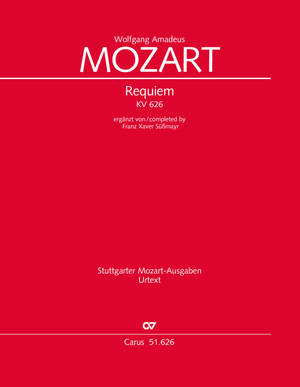
Requiem (Süßmayr version)
Mozart, Wolfgang Amadeus · arr. Süßmayr, Franz Xaver
359,100원
- 작곡가Mozart, Wolfgang Amadeus
- 에디터Leisinger, Ulrich
- 출판사Carus-Verlag (Digital)
- 편성Soprano (소프라노), Alto (알토), Tenor (테너), Bass (베이스), Mixed choir (혼성합창), 2 Clarinet (클라리넷), 2 Bassoon (바순), 2 Trumpet (트럼펫), 3 Trombone (트롬본), Timpani (팀파니), 2 Violin (바이올린), Viola (비올라), 피아노(basso continuo)
- 상품 형태파트 세트(전체)
- 고유코드CV 51.626/19010000
디지털 다운로드 안내
- 결제 즉시 입력하신 이메일로 다운로드 링크가 발송됩니다.
- 다운로드 가능 횟수(통상 3회)와 유효기간(통상 7~90일)은 출판사 정책에 따라 제한됩니다.
- 구매 부수만큼 악보를 인쇄·복제할 수 있는 라이선스입니다. 파일은 PDF 1개로 발급되며, 주문자명·부수·거래번호가 워터마크로 표시됩니다.
- 기한·횟수 내에는 주문조회 페이지에서 다시 받으실 수 있습니다. (소진·만료 후 재발급은 제한될 수 있음)
- 디지털 콘텐츠 특성상 한 번이라도 다운로드한 항목은 환불이 불가합니다.
Description
상품 설명
「레퀴엠」의 탄생 배경에는 전설과 일화가 뒤섞여 있습니다. 「La Clemenza di Tito」와 「Die Zauberflöte」의 작곡과 공연이 준 부담, 그리고 급성 감염이 겹쳐 모차르트는 짧은 투병 끝에 쓰러져 세상을 떠났습니다.
1791년 12월 5일 세상을 떠났을 때, 모차르트는 레퀴엠의 미완성 원고를 남겼는데 각 부분마다 완성도가 제각각이었습니다. 그래서 모차르트의 아내 Constanze 는 남편의 친구들에게 이 미완성 원고를 완성해 달라고 부탁했습니다. 두 차례 시도가 실패한 뒤, 그 일은 모차르트의 제자 Franz Xaver Süßmayr 에게 넘어갔고, 그는 지금은 남아 있지 않은 작업 자료와 어쩌면 작곡가가 남긴 구두 지시까지 활용해 오늘날 알려진 형태로 레퀴엠을 완성했습니다. 오늘날에도 Süßmayr 판이 가장 널리 알려져 있으며, 모차르트와 역사적으로 가장 가까운 판본임은 분명합니다.
Listen
미리 듣기
- Introitus
- Kyrie
- Dies irae
- Rex tremendae
- Confutatis
Info
상세 정보
| 작곡가 | Mozart, Wolfgang Amadeus |
|---|---|
| 편곡자 | Süßmayr, Franz Xaver |
| 에디터 | Leisinger, Ulrich |
| 출판사 | Carus-Verlag (Digital) |
| 편성 | Soprano (소프라노), Alto (알토), Tenor (테너), Bass (베이스), Mixed choir (혼성합창), 2 Clarinet (클라리넷), 2 Bassoon (바순), 2 Trumpet (트럼펫), 3 Trombone (트롬본), Timpani (팀파니), 2 Violin (바이올린), Viola (비올라), 피아노(basso continuo) |
| 고유코드 | CV 51.626/19010000 |
| 작곡연도 | 1791 |
| 연주시간 | 약 47분 |
| 언어 | Latin |
| 사이즈 | 23 × 32 cm |
| 최소주문수량 | 1 |
디지털 콘텐츠 특성상 결제 완료 후 환불이 불가합니다. 결제 전 미리보기 및 상품 정보를 충분히 확인해 주세요. 환불 정책