
- 디지털 악보, 즉시 다운로드
- 전화: 02-597-3157
- 카카오톡 상담
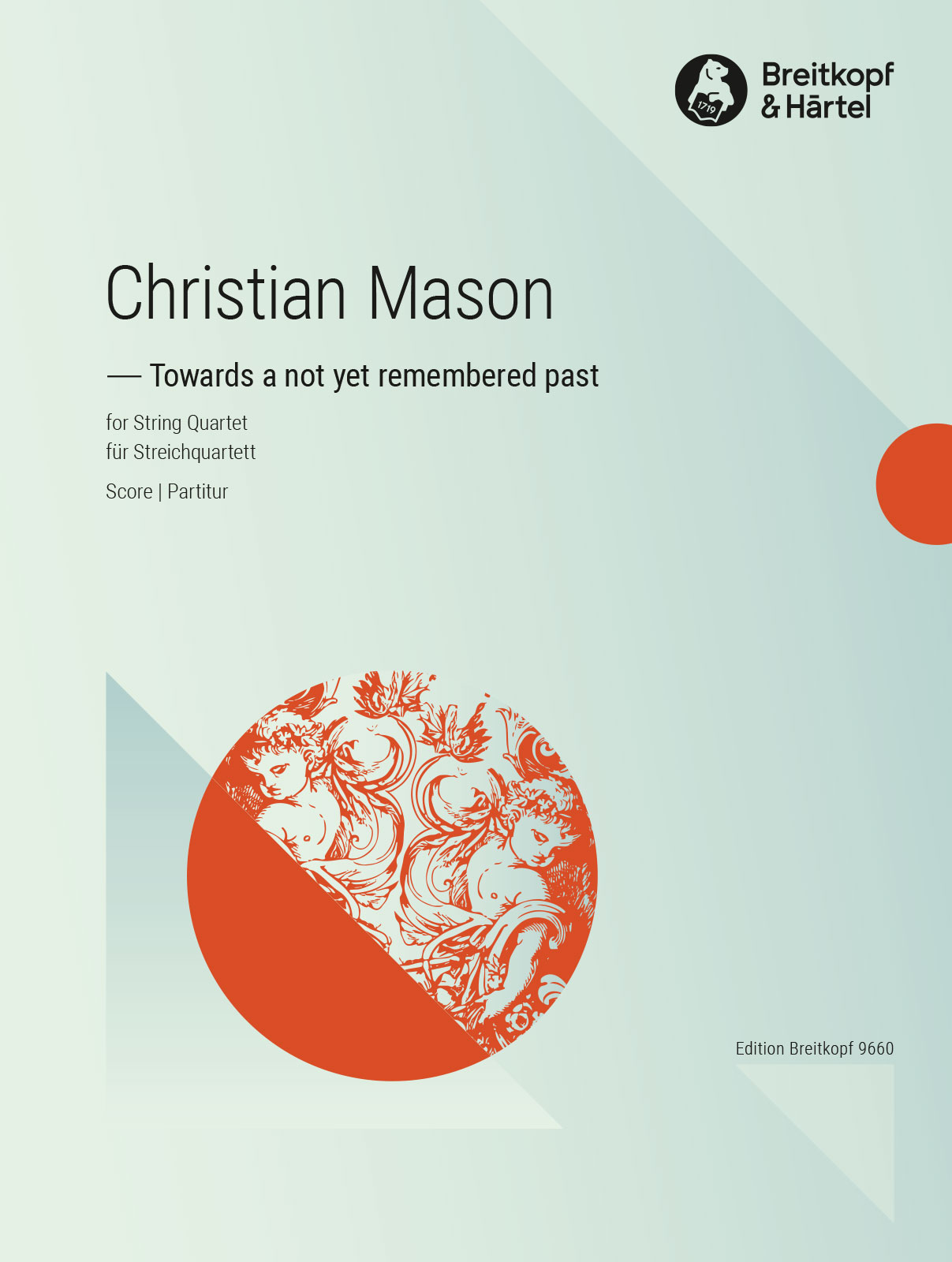
Towards a not yet remembered past
Mason, Christian
123,500원
- 작곡가Mason, Christian
- 출판사Breitkopf & Härtel (Digital)
- 페이지수74쪽
- 편성2 Violin (바이올린), Viola (비올라), Cello (첼로)
- 악보 형태총보
- 고유코드EB 9660D
디지털 다운로드 안내
- 결제 즉시 입력하신 이메일로 다운로드 링크가 발송됩니다.
- 다운로드 가능 횟수(통상 3회)와 유효기간(통상 7~90일)은 출판사 정책에 따라 제한됩니다.
- 구매 부수만큼 악보를 인쇄·복제할 수 있는 라이선스입니다. 파일은 PDF 1개로 발급되며, 주문자명·부수·거래번호가 워터마크로 표시됩니다.
- 기한·횟수 내에는 주문조회 페이지에서 다시 받으실 수 있습니다. (소진·만료 후 재발급은 제한될 수 있음)
- 디지털 콘텐츠 특성상 한 번이라도 다운로드한 항목은 환불이 불가합니다.
Description
상품 설명
The notion of contemporaneity - being of the present time, and by implication ‘new’ - has been something of a core belief for many composers and artists of recent times. Maybe those of earlier times too? Yet if one thing is clear it is that the present soon becomes the past, and the new quickly becomes the old… Surely we are seeking something deeper than newness in our musical experiences? Notation and recording open windows onto other times and places, bringing them into our present, and allowing them - if only for a fleeting glimpse - to live once more. Similarly, the presentation and transformation of that which already exists can become a basis for renewal.
This piece continues a line of reflection about time and place present in all my previous works for the string quartet. The title of my 2020 quartet, This present moment used to be the unimaginable future, drew attention the the remarkable unlikeliness (despite the quotidian quality of most experience) of the here and now in which we exist; time seen as a lens through which wonders - and lessons - might be revealed.My Songbooks , on the other hand, focus more concretely on the overtone-singing traditions of Tuva and Sardinia - musical materials from unfamiliar places (I have never been to either, though I’ve heard many recordings of the music), filtered through the familiar medium of the quartet. The medium changes, but is also changed by, the message contained within the source material.
Taking tentative steps towards the future, Towards a not yet remembered past… looks back to the late 14th Century, framing three ‘original’ movements based on my own materials with four re-imaginings (variously varied transcriptions) of music by some of my favourite Medieval composers Solage, Senleches, Machaut and Baude Cordier. These works, with the exception of Machaut's Puis qu’en oubli, are to be found in the remarkable Codex Chantilly, a major sources for the so-called ars subtilior , which testifies to this period of imaginative flourishing by transmitting to us this music of playful wit, melodic beauty and rhythmic complexity. My appreciation of this music has been aided by the many marvellous and remarkably diverse recorded interpretations: my working playlist includes eleven versions of Solage, four of Senleches, six of Baude Cordier and ten of Machaut! Listening to these it becomes clear that these pieces are not fixed objects, but seeds of possibility which grow differently depending on the manner of cultivation. Meanwhile, the three ‘new’ movements share a common longing for an imagined elsewhere.
This piece is dedicated to Nicola LeFanu.
(Christian Mason, January 2025)
수록곡
- I. after Solage – Fumeux fume par fumée
- II. Blissful vistas
- III. after Senleches – La harpe de melodie
- IV. Nearer to you
- V. after Machaut – Puis qu’en oubli
- VI. Elysium
- VII. after Baude Cordier – Tout par compas suy composés
Info
상세 정보
| 작곡가 | Mason, Christian |
|---|---|
| 출판사 | Breitkopf & Härtel (Digital) |
| 페이지수 | 74쪽 |
| 편성 | 2 Violin (바이올린), Viola (비올라), Cello (첼로) |
| 악보 형태 | 총보 |
| 고유코드 | EB 9660D |
| 작곡연도 | 2026 |
| 연주시간 | 약 31분 |
| 사이즈 | 23 × 30.5 cm |
| 최소주문수량 | 1 |
디지털 콘텐츠 특성상 결제 완료 후 환불이 불가합니다. 결제 전 미리보기 및 상품 정보를 충분히 확인해 주세요. 환불 정책